Friday, 14 May 2021

Planning

 PLANNING AND COMMUNICATION

Sources TED X, 3604, BCITO 01/06. 

6 steps to creating an effective communication plan

Craig Wright

15/05/21


Parties to a construction project.

Any building work over 30 grand needs a contract, it is best practice to always have a contract. Usually, it will just be the client and the main contractor who will sign the contract but it may also include subbies, designers, suppliers, compliance and neighbours. 

The builder is usually the main contractor as he is there for the whole project and does a big scope of works, in order to stay in business means getting the price right and following through on good work standards. 


Parties to a construction project.

The main contractor is responsible for programming the construction plan, the plan should include:

Start and end dates

Critical path 

Tasks that can be carried out at the same time

When specific materials will arrive and how they will be stored.

Good planning means work will flow naturally, the programme should be updated and regular meetings should be held.


Managing the site.

Managing the site includes practical aspects like:

Provision of services

Access

Security

Waste

It may also include

Environmental aspects, noise, dust, run off.

Managing hours of work

Managing traffic

Managing Health And Safety

The PCBU is responsible for overall safety and each person is also responsible for their own and others.

Practical safety practises would include regular morning meetings, a sign-in system, signage, correct PPE maintaining a safe and tidy site.


Managing The Relationships.

It is best to keep communication open not only to the client but also with the team.

Be reliable and courteous 

Insist on professionalism

Keep site today and minimise effects on neighbourhood.


Managing Relationships with subbies.

The list of subbies needed on some sites is vast.

Most builders will build up a set of subbies they use based on common work ethics.

Other factors will likely include:

Qualifications

Quality of work

Price

Busines health

Communication

Commitments

What is expected from each sub-contractor,  should be written in contract, factors should include:

Who provides what equipment.

Client expectations

Site requirements

Restricted building work

And payment policy

Rework

It is an inevitable part of the business.

It can be awkward but must be dealt with promptly.


https://www.youtube.com/watch?v=SXm6PvvliI4


Sunday, 9 May 2021

Framed Floors

 FRAMED FLOORING

AN EXPLANATION BY CRAIG WRIGHT

SOURCES: Google, 3604, BCITO 03/06, Scott Brown Youtube, stylecraft stairs.


INTRODUCTION

I am going to explain flooring. Some of the key aspects and some of the floors I have built.

PILES

One should check the plans and have profiles already set up, strings will then be run between profiles, lower profiles should be put in on the level of the footing. Spray paint can then be used to mark the holes, along a running measurement, the other option is to run a complete profile board and run strings along pile line, the most efficient way to reach a good depth is an auger post hole borer or an auger on a digger. Profile boards can then be run at 90 degrees to the perimeter and pegged down the post can be nailed and braced to this, posts should be 100 off the ground. And can be braced back to each other and to pegs in the ground. Once poured piles can be lasered and cut to height, a scarf cut should be used to allow water to run off. If low to the ground a DPC may have to be used.

PROCESS

A framed floor will start with BEARERS, these are fixed to piles, typically with plates and wire dogs,  joins should be staggered and bows should be placed up and fixed down. Next JOISTS will run across the bearers.  Joists should be cut to the length of string lines running between the two outside joists, marks should be on bearers at the prescribed centres.  If connecting to another wall a stringer may have to be used.  The hardware will be prescribed on plans and should include joist hangers and wire dogs. 

For framed floors ventilation will have to be in place.


INSTALLING FLOORING

There are many types of flooring and decking, including:

Composite timber decking

Solid Timber

Tongue and groove

Reconstituted wood

Plywood

Fibre cement


Before installing one must check all hardware has been installed, rubbish has been removed, blocking has been installed, insulation is installed. 

For sheet flooring, manufactured specs should be checked, 

Usually joins will be staggered, fixings can be different for different products, sealants can be used.


Is it a diaphragm floor or a wet area?


Are there any penetrations?


What are the exposure factors and limits?


What are the finishing requirements?


INSTALLING TIMBER AND GROOVE STRIP FLOORING.

Usually installed on a substrate.

Start with a full length straight and true board.

If face nailing groove goes down, nails go into joists, drill pilot holes to avoid splits. Nails must be punched. Subsequent boards can be put in a few at a time and nailed later, floor clamps can be used.

If secret nailing: the tongue is exposed for nailing,  nails go on angle and punched so groove can be used. Boards must be installed one by one. An offcut can be used to tap boards into groove. 

Joins should be over joists if not on substrate and staggered.


The final board might have to be ripped.

INSTALLING DECKING

https://www.youtube.com/watch?v=3iSBTvV206c


Start with a straight and true board.

A 12m il gap should be used against the building

Pilot holes should be used for hardwood.

Spacers or wedges to allow for gap,

Allow for shrinkage.

Joins can be butt joined with small gaps or chamfered.

Blocks can be installed for extra joins

Subsequent boards should be laid out and tacked on a stringline or light chalk can be used to show the joist center for fixings.

Stainless screws may have to be used?

Board can be overhang and cut later for a straight line.

A barrier must be in place on a fall of 1 metre or more, gaps must not exceed 100mil. 


SECOND STORY FLOORS.


Can sit on top of walls or attached to faces of all frames that extend.


Types of joists can be :

Solid

Engineered

Chord truss

Steel

Or composite timber 

Joists may run opposite to bottoms storey

Allow for boundary joist

Ribbon boards and brackets might be used

Join over load bearing walls or support beam butt join or using flitch plates.

Solid block as per 3604 and allow for penetrations like a stairwell. 


EXTERIOR STAIRS


https://www.youtube.com/watch?v=CArhhrGWBsg


https://www.youtube.com/watch?v=VyD8-7GqZ4g


No description available.

Stair Calculator


https://www.stylecraftstairs.co.nz/wp-content/uploads/Stair-Planning-Guide-for-New-Zealand-homeowners.pdf


https://www.stylecraftstairs.co.nz/wp-content/uploads/Staircase-Terminology-Housed-vs-Cut-Stringer.pdf


https://www.youtube.com/watch?v=kFkgqi7I3xE


STAIR BARRIERS


Like decks barriers must prevent a fall of 1m or more. Min height is 900 above treads. Spaces must not exceed 100mil. 150 is ok for the triangle at bottom of stair.


RAMPS

Gradient no more than 1 in 12

 Clear width of 1200

Landings 1200 at top and bottom

900 high handrails with 300 mil extensions top and bottom

Upstands a min of 75 mil

Barriers between upstand and handrail.


Install support structure first - be aware of ground protection.

Install stringers

Install decking


Staircase and barrier at Dargaville Vets.


warkworth school


langs cove


Saturday, 8 May 2021

SITE ESTABLISHMENT

 SITE ESTABLISHMENT

AN EXPLANATION BY CRAIG WRIGHT

SOURCES: Google, 3604, BCITO 02/06


INTRODUCTION

I am going to explain Site Establishment. Some of the key aspects and some of the sites I have helped set up

SITE ESTABLISHMENT AND INVESTIGATION

SITE PLANS

Can be used to identify the direction of North

Lot number

Special features such as trees.

Location of existing buildings.

The location of existing buildings and services.

The location of existing or proposed driveways.


BOUNDARY MARKS

Usually are 4 pegs, they need to be marked, sometimes a disk shot on to concrete is used. Existing marks may not always be correct and should be correct. One can re-check of something existing, off the plans or get a surveyor in. 

SERVICES

The existence of services need to be determined or put in prior to work commencing as these will be needed throughout build and then finally connected, in most cases temporary water and power will be connected and sometimes sewage.


SITE ESTABLISHMENT AND INVESTIGATION

Some things you need to establish before main works begin is.

TEMPORARY FENCING OR BOUNDARIES.

Stops the public from entering and blocks off any dangerous areas such as holes.

SIGNAGE

Not only acts as an advert for the contractor and clearly identifies the site, but also will list the dangers, and site requirements like PPE as well as emergency procedures. 


SITE ACCESS

Usually a gate or a driveway, sometimes the ground needs to be protected for future driveways.

SITE MAINTAINENCE

STORAGE

Thought should be given to the storage of goods moving forward on-site, security, protection from weather manufacturer specs, and hazardous materials should all be taken care of.


WASTE MANAGEMENT

  Thoughts should be given to a site of the bin, access for the driver, and a waste minimisation plan as well. 


ENVIROMENTAL CONCERNS

Thoughts should be given to runoff entering drains, or waterways, storage of any hazardous materials, wash down areas, and existing trees and natural surrounds.

PROTECTION

Thoughts should be given to existing buildings and features these will need to be protected from, people, the weather and machinery. Thoughts and careful plans must be in place if the client is still living or using the spaces.


INTERIOR HARDWARE

 INTERIOR HARDWARE

AN EXPLANATION BY CRAIG WRIGHT


INTRODUCTION

I am going to explain the various types of interior hardware and their uses and give a summary of some of the interior hardware that I have used.


INTERIOR HARDWARE

As builders we often refer to hardware as in connectors and straps this section hoever refers to joinery hardware.

They are part of the design element and are often used to make the joinery astehtically pleasing and also practical.


Often the hardware has not been thought out in advance so a carpenter will have to use the appropriate plugs to fit to the substrate, also using the right size drill bit and sharp chisels are important, there are many proprietary tools that can make the job easier like jigs for routers.


TYPES OF HARDWARE

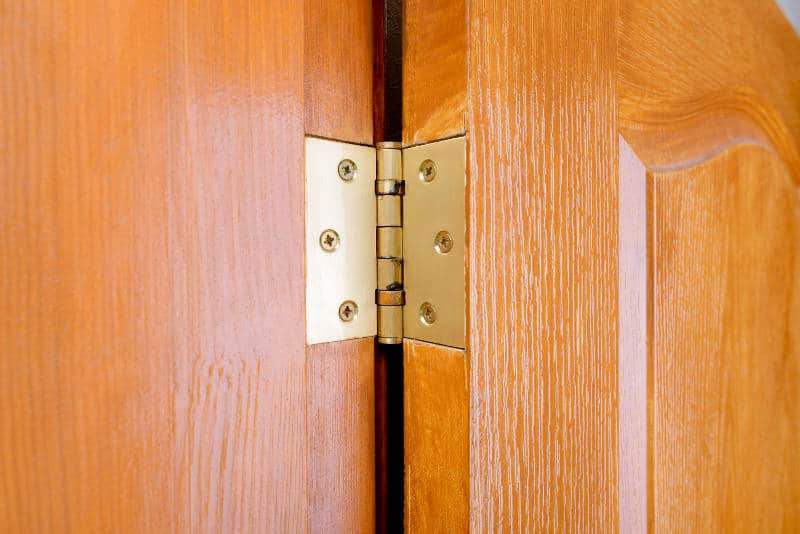
  1. Hinges there are many different types, like butt hinges and parliament hinges, they are used to open cupboards doors and windows

  2. Latches and locks used to open and close doors they come in various formats like passage sets or privacy sets.

  3. Window and door stays to make doors and windows only open to a certain point or to close automatically.

  4. Door stops and latches

  5. Toilet and towel rails, brackets and disabled handles.

PROCEDURE

Check plans and manufacturers specs. Take into account needs of the user. Make sure it works in the environment ie does not affect door openings. Install correctly and with right fixings. 


EXAMPLES

Door handles Kaikohe houses.


Door Hinge Types: What's Available for Your Door?Beehive Window Stay Antique Satin Brass 10" - Broughtons Lighting &  IronmongeryElderly And Disability Bathroom Support Handles - Awesome Stuff 365Buy TDX Lever Door Handle

 BUILDING TYPES AND METHODS

An explanation, by Craig Wright


INTRODUCTION

There are loads of different building types and methods here I will try to explain some I have learnt about and some I have built.

BUILDING TYPES

  1. Light timber frames: Probably the most common form of building in New Zealand, timber has to be at least H1.2, frames can be made on site in situ or more commonly in a pre nail factory. Sometimes they connect and relate with steel beams or laminate beams, they can be made on a poured concrete pad or on top of piles. 


  1. Light Steel Frames: made most commonly with galvanised steel and fixed together with propriety tech screws - pre painted. Steel framing stays true, does not warp, and is lighter than timber, but in my opinion, is more difficult to put together and does not lend itself easily to future renovations. 


  1. Heavy Timber construction: more common in expensively designed houses these days, this used to be a more traditional style of building - in England for example. These heavy frames do not usually use nails or screws but mortise and tendon joins. These days modern factory produced steel connectors can be used. 


  1. Heavy Steel Construction like heavy timber frames the load is transferred to columns, the strength and lightweight of steel means you can produce great spans, which is why this style of building is commonly used in factory warehouses, the buildings can be too noisy to be used in residential however this can be mitigated. This style can also be used for multi-story buildings. 


  1. Concrete construction: Concrete construction is very common and very tried and tested, you can use precast elements or pour on site, concrete is strong in compression but weak in tension so steel must always be used. Concrete is porous, so damp proof membranes must be used


  1. Natural: some more greener options of buildings are earth, cob, rammed earth, and poured earth also there are straw mud and hemp houses. 


  1. Log Cabin: Something I have always personally wanted to do.  Not so common here in New Zealand because of the lack of suitable trees and the cost. 


  1. Some other Alternative building methods include: interlocking solid timber, various panel systems, and modular.  


BUILDINGS I HAVE WORKED ON

This is the cottage my son lives in, the white one was an existing one we re lined with gum lining that was felled and milled on site.The add on was made with macrocarpa framing which was also felled and milled on site the macrocarpa was not treated, as it does not need to be. The lining was gib board with solid plaster mixed with paint over the top


This is a fancy house in Ponsonby it had a car elevator, as the house was right on the front boundary... ie no lawn so car would drive in the garage, descend and allow for another car, we used block, pre cast panels, on site- made form work and Doka formwork.

Some Pozi Struts at a fancy designed house in Algies it had some Heavy timber framing, a block foundation and high end finishing it also had a elevator in it, this is the house below.


this is the Oaks Retirement village in Warkworth we built, one 5 storey and one 4 story building it was heavy steel beams with precast concrete panels which were craned in, the whole top floor was all light timber frames to allow for the roof design.


these are modular houses we built in the yard in Whangarei and trucked to Auckland for install they were light timber frames, we craned the top floor on top of the bottom floor.


Some light steel frames houses we built for a Maori trust in Kaikohe.


Large scale formwork Ngawha power plant.


Block work designer house Langs Cove.


Heavy steel framing Shade Systems Dargaville.


I never built this well I helped make the boy but this is the stone house in Kerikeri another style of construction that stands the test of time.


I did not build this, stayed across the road thought it was a good example of modern brick which fitted the history of area, (site was an old brick works) would of been heavy steel framing inside I think to support different levels, either that or pre cast panels.